Used Angular Contact Thrust Ball Bearing for sale (20,956)
Sort results
- Lowest price Highest price
- Newest listings Oldest listings
- Shortest distance Farthest distance
- Newest year of manufacture Oldest year of manufacture
- Latest update Oldest update
- Manufacturer A to Z Manufacturer Z to A
- Relevance
- Lowest price
- Price
- Highest price
- Price
- Newest listings
- Release date
- Oldest listings
- Release date
- Shortest distance
- Distance
- Farthest distance
- Distance
- Newest year of manufacture
- Year of construction
- Oldest year of manufacture
- Year of construction
- Latest update
- Update
- Oldest update
- Update
- Manufacturer A to Z
- Manufacturer
- Manufacturer Z to A
- Manufacturer
- designation from A to Z
- Description
- designation from Z to A
- Description
- Model from A to Z
- Model
- Model from Z to A
- Model
- Lowest reference
- Ref.No.
- Highest reference
- Ref.No.
- Shortest runtime
- Runtime
- Longest duration
- Runtime
- Relevance
- Relevance
Listing
Kusel
980 km
Network guard
Phoenix ContactRS4000 TX/TX
Call
Condition: used, Industrial security appliance for protecting and segmenting automation networks. Suitable for use in production facilities, machine controls, and industrial Ethernet networks.
Manufacturer: Phoenix Contact
Series: FL MGUARD
Type: RS4000 TX/TX
Product type: Industrial security router/firewall
Condition: used
Quantity: 1
Communication standard: Industrial Ethernet
Ports: 2 × RJ45 Ethernet TX
Hsdpjzduzhsfx Am Ter
Transmission rate: 10/100 Mbit/s
Function: Firewall, VPN, network segmentation
Mounting type: DIN rail
Protection class: IP20
Diagnostic functions: LED status indicators
Application area: Industrial network security, remote maintenance, machine and system communication
Listing
Duxford
436 km
Phoenix FS1513K Fire Ranger Fire Proof Cabinet
Phoenix ContactFS1513K Fire Ranger
Call
Condition: used, This listing is for a Phoenix FS1513K Fire Ranger Fireproof Cabinet
The unit is in full working condition and is ready for immediate use
THE PHOENIX FIRE RANGER sets new standards for protection against fire and burglary attack in an economic, convenient, and attractive format. Ideal for offices, schools, and healthcare settings, this robust safe offers peace of mind with strong fire resistance, tested security, and practical storage design.
Key Features
Fire Protection:
Provides 30 minutes fire protection for paper records at temperatures up to 500°C, ensuring vital documents are safeguarded in the event of a fire.
Locking:
Fitted with a high-security double-bitted VdS Class I key lock, offering a reliable and secure locking mechanism against unauthorized access.
Security Protection:- Confirm with your insurer
Independently tested to the European S1 Security standard (EN14450), providing:
Cash cover: £2,000
Valuables cover: £20,000
Construction & Boltwork:
Built with a double-walled steel body and fire-resistant barrier material.
The high-security 3-way espagnolette boltwork system enhances strength and resistance to forced entry.
Storage & Interior:
Supplied with height-adjustable shelves, including hanging rails for lateral files, enabling flexible document storage.
Also suitable for the storage of controlled drugs where active ingredients do not exceed 500 grams.
JCQ Compliant (FS1510K S1 variant):
Meets the Joint Council for Qualifications (JCQ) standards for secure storage of exam papers and confidential materials.
Finish:
Painted in a high-quality scratch-resistant white (RAL9003) finish, giving it a clean, professional appearance.
Dimensions & Specifications
External Dimensions: 1950mm (H) x 930mm (W) x 520mm (D)
Internal Dimensions: 1810mm (H) x 815mm (W) x 410mm (D)
Hedpfxoxv Dnnj Am Tor
Weight: 133kg
Capacity: 605 litre
Listing
Włocławek
1,494 km
Meat processing machine
Piec Kontaktowy “Hitec” contact cookerType BG 600 - 3600 E
Call
Condition: excellent (used), Year of construction: 2021, machine/vehicle number: 192378-16-001, total length: 6,000 mm, total width: 2,400 mm, total height: 2,750 mm, overall weight: 6,000 kg, Equipment: type plate available, Contact Oven "Hitec", type BG 600-3600 E
continuous grilling line
All stainless steel
with lower and upper belt: lower and upper heating
Belt temperature adjustable separately
Mesh length: 3,600 mm
Belt width: 600 mm
Electrically heated
136 kW
Hodpfx Amswxvqps Ter
Belt washing system
Temperature range from 50 to 260°C
Adjustable speed
Dimensions (L x W x H): approx. 6,000 x 2,400 x 2,750 mm
year: 2021
Condition: Like new

Get information now
+44 20 806 810 84
+44 20 806 810 84
List now
*per listing / month
Listing
Germany
1,034 km
DC-Rack
Phoenix ContactCharx Power 30kW
Call
Condition: ready for operation (used), A rack for DC power modules with two electrical housing units is available. Power module Phoenix Contact Charx Power 30kW, max. voltage AC/DC: 3x 530V/1000V, rated power: 30kW, efficiency: over 95%, dimensions X/Y/Z: approx. 483mm/134mm/550mm, weight: approx. 31kg. Including two electrical housing units. Documentation available. On-site inspection is possible.
Hjdpfx Aju Iztmjm Tjr
Listing
Zheng Zhou Shi
8,333 km
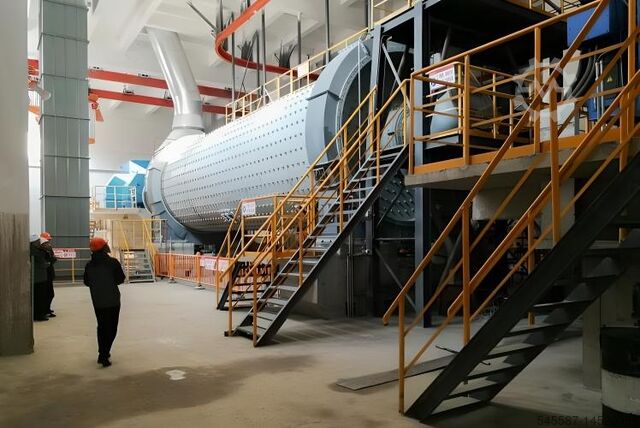
Ball mill for powder and mining plant
Mingyuan Ball Mill For Fine PowderPowder grinding mill for coal, silica
Call
Condition: new, functionality: fully functional, power: 55 kW (74.78 HP), Year of construction: 2026, Ball Mill for Powder and Mining Plant: Structure, Function, and Technical Details
A ball mill is a key grinding machine widely used in mining, metallurgy, cement, chemical, and powder-making industries. It is designed to grind various ores and other materials into fine powder through impact and attrition between steel balls and the material inside a rotating cylindrical shell. In mining plants, ball mills are essential for ore beneficiation, preparing materials for flotation, magnetic separation, or leaching processes. In powder production, they ensure uniform particle size and high surface area for further processing.
Working Principle
The ball mill operates on a simple yet effective principle: as the cylindrical shell rotates around its horizontal axis, the grinding media (steel or ceramic balls) are lifted along the inner wall by centrifugal force and friction. When they reach a certain height, they fall freely, striking and grinding the material below. This repeated motion causes both impact and abrasion, reducing the material to the desired fineness. The grinding process can be performed in dry or wet conditions depending on the application.
Structural Composition
A standard ball mill consists of several main components:
Feeding part: Equipped with a feeder or screw conveyor to ensure uniform material input.
Discharging part: Can be grate type or overflow type, depending on the discharge method.
Hodpfxjq Nf U Ej Am Tor
Rotating part: The cylindrical shell made of steel plates, lined with wear-resistant liners.
Transmission system: Includes motor, reducer, small transmission gear, and electrical control.
Grinding media: Steel balls or ceramic balls of different diameters for efficient grinding.
The internal liner design and ball size distribution are optimized to achieve maximum grinding efficiency and minimal energy consumption.
Technical Details
Typical Specifications:
Feeding size: ≤25 mm
Discharge size: 0.074–0.4 mm
Capacity: 0.65–615 t/h (depending on model and material hardness)
Cylinder speed: 18–38 r/min
Power: 18.5–4500 kW
Liner material: High manganese steel, rubber, or alloy steel
Grinding media load: 30–45% of cylinder volume
Operating Modes:
Dry grinding: Suitable for materials that must remain moisture-free, such as cement clinker, limestone, and quartz.
Wet grinding: Common in ore beneficiation, where water or slurry improves grinding efficiency and particle uniformity.
Application in Mining Plants
In mining operations, ball mills are used after crushing to further reduce ore size and liberate valuable minerals. They are integrated into grinding circuits with classifiers, hydrocyclones, and flotation systems. The ground material is classified by size, and oversized particles are returned to the mill for regrinding. This closed-circuit system ensures consistent product fineness and efficient energy use.
Common Applications:
Gold, copper, iron, and zinc ore grinding
Cement clinker and slag processing
Silicate and ceramic powder production
Coal and mineral powder preparation
Conclusion
A ball mill is an indispensable piece of equipment in both powder production and mining beneficiation plants. Its ability to grind materials into fine, uniform particles makes it vital for downstream processes such as flotation, sintering, and chemical reactions.
Listing
Zheng Zhou Shi
8,333 km
Crushing equipment
Mingyuan Dry and Wet Ball MillCustomerizable Model for ball mill plant
Call
Condition: new, functionality: fully functional, Year of construction: 2026, Dry and Wet Ball Mill: Structure, Operation, and Technical Details
A ball mill is a fundamental grinding device used in mineral processing, cement manufacturing, chemical production, and other industrial applications. It works by rotating a cylindrical shell filled with grinding media—usually steel balls—causing impact and friction that reduce materials to fine powder. Based on the grinding environment, ball mills are classified into dry and wet types, each suited for specific materials and process requirements.
Working Principle
Both dry and wet ball mills operate on the same mechanical principle. The rotating cylinder, driven by a motor through a gear system, lifts the grinding media and material along the inner wall. As the rotation continues, the balls fall under gravity, striking and grinding the material. The difference lies in the presence or absence of a liquid medium during grinding.
Dry Ball Mill
Hodpfxsq Nx Ale Am Tsr
A dry ball mill is used when the material must remain moisture-free or when water could affect product quality. It is commonly applied in cement clinker, limestone, quartz, and refractory material grinding. The discharge can be either grate type or overflow type, depending on the desired fineness.
Technical Features:
Feeding size: ≤25 mm
Discharge size: 0.075–0.4 mm
Capacity: 0.65–90 t/h
Liner material: High manganese steel or wear-resistant alloy
Drive system: Gear-driven or direct-coupled motor
Dust control: Equipped with air exhaust and dust collector
Advantages:
Suitable for materials sensitive to moisture
No drying process required after grinding
Lower corrosion risk and simpler maintenance
Easier material classification and separation
Limitations:
Dry grinding produces more dust and heat, requiring efficient ventilation and dust collection systems.
Wet Ball Mill
A wet ball mill operates with water or another liquid medium added to the material. The slurry formed during grinding improves efficiency by reducing friction and preventing excessive heat buildup. It is widely used in ore beneficiation, ceramics, and chemical industries.
Technical Features:
Feeding size: ≤25 mm
Discharge size: 0.074–0.2 mm
Capacity: 0.65–615 t/h
Liner material: Rubber or high-chromium steel
Discharge method: Overflow or grate type
Auxiliary equipment: Classifier, pump, and thickener for slurry circulation
Advantages:
Higher grinding efficiency and finer particle size
Reduced dust and noise levels
Continuous operation suitable for beneficiation circuits
Better control of particle uniformity
Limitations:
Requires drying if the final product must be in powder form and involves more complex slurry handling.
The selection between dry and wet grinding depends on the material characteristics, downstream process, and environmental conditions. Dry mills are preferred for materials that must stay moisture-free, while wet mills are ideal for fine grinding and slurry-based processes.
Conclusion
Dry and wet ball mills share the same mechanical structure but differ in their grinding environment and application scope. The dry type offers simplicity and low maintenance for moisture-sensitive materials, while the wet type provides higher efficiency and finer output for mineral and chemical processing. Understanding their technical parameters and operational differences ensures optimal equipment selection, improved productivity, and reliable performance in industrial grinding operations.
Listing
Zheng Zhou Shi
8,333 km
Mill / grinding mill
Batch Ball Mill, Silica grinding millQuartz ball mill, silica powder grinding
Call
Year of construction: 2026, condition: new, ceramic ball mill ,Batch ball mill ,also called ceramic ball mill ,it is used for fine grinding of feldspar,quartz,clay,ore and so on.The ceramic ball mill is mainly used for material mixing, grinding,uniform product fineness,and saving power.It can be dry or wet.The machine can use different liner types according to production needs to meet different needs.The fineness of the grinding operation is controlled by the grinding time
ceramic ball mill Working principle
when ball mill working,steel balls inside drum will rotate with the drum to some height,and then steel balls fall down with materials to reach the point of grinding.
Hsdpsvzx Ausfx Am Tsr
Working Principle of Ceramic ball mill
ceramic ball mill ,Intermittent ball mill grinding operation is finished in the cylinder body. When the cylinder rotates, materials ascend to a certain height and then fall along a certain path due to the balls' gravity. Two forces are generated on the balls inside. One is the force on balls through tangent direction; the other is a opposite force in the contrast to the diameter of balls, as a result of the force generated when the balls slide down. These two forces will constitute a couple for the steel balls. The balls are squeezed between the cylinder and the adjacent steel balls, so the couple can make unequal-sized friction force. The balls will orbit along with the cylinder axis and then fall down, which can produce a strong impact force on the ores in the cylinder body and, as a result, the ores will be crushed. In conclusion, the ores in the cylinder body are mainly crushed by composite effect of peeling force, impact force and extrusion force.
Ceramic ball mill also named Intermittent ball mill which adopts the wet intermittent operation, is used for fine grinding and mixing the material such as feldspar, quartz, clay ceramic raw materials. The discharging and the mud size can through through 1000 sieve pore. This machine is high milling machinery, materials should be Broken in the fineness of the state into the grinding mill to get the highest efficiency and economic benefits.
The cement mill is key equipment for the grinding process of the cement clinker after the crushing process of it. It is mainly used in the cement silicate product industry. After long term design and manufacture of the cement mill, our company now has series of cement mill with various specifications to meet with different requirement from our customers.
Features of Cement Mill
Our company adopts suitable transmission methods according to different specifications. We have brim drive and center drive as transmission form. The cylinder adopts new type step lining to increase the grinding area. And it is easily repairable and changeable. The new designed separate-chambered structure adopts flexible lifting blade and fixed lifting blade and it is easily fixed and repaired.
Technical Details
We have different models and options for different requirements, please contact us for more info.
Listing
Zheng Zhou Shi
8,333 km
Glass grinding machine
Henan Mingyuan Ceramic /Silica Ball MillBatch ball mill for glass ceramic making
Call
Condition: new, Year of construction: 2026, power: 7.5 kW (10.20 HP), Batch ball mills find applications in various industries where the processing of materials in discrete batches is required. The versatility of batch ball mills makes them suitable for a range of applications. Here are some common batch ball mill applications:
1. Ceramics Industry:
- *Glaze Preparation:* Batch ball mills are extensively used in the ceramics industry for preparing glazes. Raw materials such as feldspar, quartz, and clay are ground with ceramic balls to achieve the desired particle size for glaze formulation.
2. Chemical Industry:
- *Material Grinding:* Batch ball mills are used for grinding and blending various chemical materials. This includes the production of pigments, dyes, and other specialty chemicals where precise particle size control is crucial.
3. Pharmaceuticals:
- *Drug Formulation:* In pharmaceutical manufacturing, batch ball mills are used for grinding and blending powders to create drug formulations. The controlled environment provided by these mills is essential for maintaining the integrity of pharmaceutical compounds.
Hedpfxeq I N H Nj Am Tjr
4. Food Industry:
- *Ingredient Mixing:* Batch ball mills may find application in the food industry for mixing and grinding ingredients. This can include the production of food additives, flavorings, and other powdered or granular products.
5. Mining and Minerals Processing:
- *Ore Grinding:* Batch ball mills are used in mining and minerals processing for grinding minerals and ores. The controlled grinding helps in obtaining the desired particle size for subsequent processes, such as mineral separation or extraction.
6. Paints and Coatings:
- *Pigment Dispersion:* In the paints and coatings industry, batch ball mills are employed for dispersing pigments into paint formulations. Achieving a uniform particle size is crucial for the quality and appearance of the final coating.
7. Building Materials:
- *Raw Material Grinding:* Batch ball mills are used in the preparation of raw materials for the production of building materials, such as cement and concrete. Grinding of materials like limestone and clay helps in obtaining the desired fineness for subsequent processes.
8. Electronic Materials:
- *Ceramic Powder Processing:* In the electronics industry, batch ball mills can be employed for processing ceramic powders used in the production of electronic components and insulating materials.
9. Research and Development:
- *Material Testing:* Batch ball mills are often used in research and development laboratories for testing and optimizing material formulations. They provide a controlled environment for small-scale processing and experimentation.
10. Customized Applications:
- *Specialized Processes:* Batch ball mills can be adapted for various specialized processes in different industries where precise grinding and mixing are required. Custom modifications can be made based on specific application requirements.
When using a batch ball mill, it's important to consider factors such as the type of material being processed, desired particle size, and the specific requirements of the end product. Additionally, following the manufacturer's guidelines and maintaining proper operating conditions are essential for efficient and effective milling processes.
Technical details
We have different options for different requirements, please contact our team for more info.
Listing
Zheng Zhou Shi
8,333 km
Cement mill,clinker grinding plant
Clinker grinding mill / cement ball millcement grinding with air classifier
Call
Year of construction: 2026, condition: new, functionality: fully functional, A cement clinker grinding mill is a specialized equipment used to grind the hard nodular clinker into fine powder, which is cement. Most cement is currently ground in ball mills and also vertical roller mills, which are more effective than ball mills.
Here are key features and information about cement clinker grinding mills:
1. Raw Materials:
- The main raw material for making cement is clinker, which is produced by sintering limestone and clay. Other materials such as gypsum, fly ash, or slag may also be added during the grinding process to achieve specific properties.
2. Grinding Process:
- The clinker and other additives are finely ground in the grinding mill to produce cement. The grinding process is a crucial step in cement production and contributes significantly to the final quality of the product.
3. Types of Mills:
- Ball Mills: Traditional ball mills are commonly used for grinding clinker. They operate by rotating a cylinder with steel grinding balls, causing the balls to fall back into the cylinder and onto the material to be ground.
- Vertical Roller Mills (VRM): VRM technology has become increasingly popular for clinker grinding. These mills use a rotating table with rollers to crush and grind the clinker, providing energy efficiency and a smaller footprint compared to ball mills.
4. Gypsum Addition:
- Gypsum is often added during the grinding process to control the setting time of the cement. It prevents flash setting of the clinker and facilitates the formation of a workable and pumpable cement paste.
5. Quality Control:
- Quality control measures, such as monitoring the fineness of the cement, chemical composition, and other properties, are implemented during the grinding process to ensure the final product meets the required specifications and standards.
6. Clinker Cooling:
- Before grinding, the clinker is produced by heating the raw materials in a kiln. The clinker is then cooled before entering the grinding mill to prevent excessive heat build-up during grinding.
7. Dust Collection and Environmental Considerations:
- Dust collectors and air pollution control systems are often employed to capture and control the dust generated during the grinding process, addressing environmental and safety concerns.
8. Packaging and Storage:
- After grinding, the cement is typically stored in silos before being packaged in bags or dispatched in bulk for distribution to construction sites or for sale in the market.
Cement clinker grinding mills play a crucial role in the cement production process, and advancements in technology continue to improve the efficiency and environmental sustainability of the grinding process.
Technical details
We have different options for different requirements, please contact our team for more info.
Hjdoq Nfbhspfx Am Ter
Listing
Zheng Zhou Shi
8,333 km
Powder grinding mill
ball mill for mining &fine powder makingsilica/Barite/limestone powder plant
Call
Condition: new, Year of construction: 2026, power: 300 kW (407.89 HP), Ball Mill for Mining & Fine Powder Making:
A ball mill is a fundamental grinding device widely used in mining, metallurgy, cement, and chemical industries. It is designed to grind ores and other materials into fine powder through impact and attrition between steel balls and the material inside a rotating cylindrical shell. In mining plants, ball mills are essential for ore beneficiation, while in powder-making industries, they ensure uniform particle size and high surface area for further processing.
Hodsq Ngafjpfx Am Tsr
Working Principle
The ball mill operates on the principle of impact and friction. As the cylindrical shell rotates around its horizontal axis, the grinding media—usually steel or ceramic balls—are lifted along the inner wall by centrifugal force and friction. When they reach a certain height, they fall freely, striking and grinding the material below. This repeated motion breaks down the material into fine particles. The process can be carried out in dry or wet conditions depending on the application.
Structural Composition
A standard ball mill consists of several main components:
Feeding part: Ensures uniform material input through a feeder or screw conveyor.
Discharging part: Can be grate type or overflow type, depending on the discharge method.
Rotating part: The cylindrical shell made of steel plates, lined with wear-resistant liners.
Transmission system: Includes motor, reducer, small transmission gear, and electrical control.
Grinding media: Steel or ceramic balls of various diameters for efficient grinding.
The internal liner design and ball size distribution are optimized to achieve maximum grinding efficiency and minimal energy consumption.
Technical Details/Typical Specifications:
Feeding size: ≤25 mm
Discharge size: 0.074–0.4 mm
Capacity: 0.65–615 t/h (depending on model and material hardness)
Cylinder speed: 18–38 r/min
Power: 18.5–4500 kW
Liner material: High manganese steel, rubber, or alloy steel
Grinding media load: 30–45% of cylinder volume
Operating Modes:
Dry grinding: Used for materials that must remain moisture-free, such as cement clinker, limestone, and quartz.
Wet grinding: Common in ore beneficiation, where water or slurry improves grinding efficiency and particle uniformity.
Application in Mining and Powder Production
In mining operations, ball mills are used after crushing to further reduce ore size and liberate valuable minerals. They are integrated into grinding circuits with classifiers, hydrocyclones, and flotation systems. The ground material is classified by size, and oversized particles are returned to the mill for regrinding. This closed-circuit system ensures consistent product fineness and efficient energy use.
In fine powder production, ball mills are used to produce materials such as silicate, ceramic powder, refractory materials, and chemical raw materials. The uniform particle size achieved by ball milling enhances product quality and performance in downstream applications.
Conclusion
A ball mill is an indispensable piece of equipment for both mining and fine powder making. Its ability to grind materials into fine, uniform particles makes it vital for ore beneficiation and industrial powder production. With flexible configurations, high efficiency, and reliable operation, modern ball mills provide a cost-effective and energy-efficient solution for large-scale grinding, ensuring consistent quality and productivity across diverse applications.
Listing
Zheng Zhou Shi
8,333 km
Roll forming line
Rod ball mill / Rod Grinding MillFor Sand and mining beneficiation plant
Call
Condition: new, Year of construction: 2026, We have various kinds of ball grinding mill such as batch ball mill, rod mill, cement ball mill, mining ball mill, welcome to contact our team for further details according to your specific requirements.
Hodeq I Nw Ijpfx Am Ter
Listing
Zheng Zhou Shi
8,333 km
Ball Mill for Ore mining & sand grinding
batch ball mill & wet mining ball mill2400X4500 ball mill
Call
Condition: new, fuel type: electric, Year of construction: 2026, machine/vehicle number: 2700x4500, Equipment: low noise, Main Technical parameters of the ball mill
Drum diameter: 2400mm
Drum length: 4500mm
Motor power: 320KW
Max input size: 25mm
Capacity:35-60 t/h
Hodpfx Asq Igiiem Ter
Weight: 72Tons
Ball loading: 30Tons
Besides this model, we also have the other models like 2700x4500, 3200x4500, 1830x13000mm, and so on, and we can also offer customerization service, we can also provide complete grinding solution for various industries like cement, quartz, ore beneficiation plant, and so on, welcome to contact us for more info.
A ball mill is a common grinding machine used to grind and blend materials for use in mineral processing, including ore mining and the production of silica (silicon dioxide). When it comes to ore mining and silica grinding, the characteristics of the ore and the final product requirements will play a crucial role in selecting the appropriate ball mill.
Here are some considerations for using a ball mill in ore mining and silica grinding:
1. Ore Characteristics:
- Hardness: The hardness of the ore determines the type of ball mill that is most suitable. Harder ores may require a more robust and wear-resistant ball mill.
- Particle Size Distribution: The initial particle size of the ore affects the grinding process. Different ores may require different approaches to achieve the desired particle size.
2. Silica Grinding:
- Silica Content: If the primary goal is to grind silica, it's important to consider the initial silica content and the desired final particle size. Silica grinding often requires special attention to prevent excessive wear on the milling equipment.
3. Ball Mill Type:
- Overflow vs. Grate Discharge: The type of discharge from the ball mill can impact the final product and the grinding efficiency. Overflow mills are generally used for most grinding applications, while grate discharge mills are more suitable for certain types of ores.
4. Mill Size and Capacity:
- Mill Diameter and Length: The size of the ball mill should be selected based on the amount of material to be ground and the desired throughput.
- Capacity: Ensure that the chosen ball mill has the capacity to handle the required volume of material efficiently.
5. Grinding Media:
- Material and Size: The choice of grinding media (balls or cylpebs) and their size depends on the hardness of the ore and the desired final particle size. Different grinding media materials can impact the purity of silica during grinding.
6. Liners and Lifting Aids:
- Liners: Consider the type of liners used in the ball mill to protect the shell and optimize the grinding process.
- Lifting Aids: Some mills use lifting aids to enhance the grinding action and promote better mixing of the material.
7. Control and Monitoring Systems:
- Automation: Utilize control systems to automate the milling process and ensure optimal performance.
- Monitoring: Regularly monitor the milling process to adjust parameters as needed for consistent and efficient operation.
8. Safety Measures:
- Safety Systems: Implement safety features to protect personnel and equipment during operation.
Always follow the manufacturer's recommendations and guidelines for operation and maintenance to ensure safe and efficient use of the ball mill in ore mining and silica grinding applications.
Listing
Zwevegem
681 km
Teflon- Contact cooker Type CC 618
FormcookTeflon Contact Grill Type CC 618
Call
Condition: used, continuous grilling line
all stainless steel
adjustable product height
with lower and upper belt : bottom and top grilling
independent temperature control below and above
net length 1.800 mm
belt width 600 mm
electrically heated ± 90 kW
belt washing system above and below
adjustable temperature range per heating plate (6 pieces)
Hsdpfszl S E Hjx Am Tor
capacity up to 250 kg/h depending on the product
adjustable speed
dimensions (l x b x h): ± 3.000 x 1.650 x 2.400 mm
Listing
Wiefelstede
785 km
Contact analyst
DemagDematik MKA-2 46953144
Call
Condition: excellent (used), Crane control unit, controller, safety control unit, safety switch, safety sensor, control unit, overload release power sensor, gear limit switch, contact evaluator, frequency evaluator
Hjdpfxozmrino Am Tjr
-Manufacturer: DEMAG, crane control contact evaluator, original packaging
-Type: Dematik MKA-2
-Item No.: 46953144
-Cardboard dimensions: 175/115/H60 mm
-Weight: 0.4 kg
Listing
Ennepetal
848 km
Angular Clamping Device
Call
Condition: used, Year of construction: 2000, length 800 mm
width 800 mm
height 1000 mm
total power requirement 0 kW
weight of the machine ca. 700 kg
dimensions of the machine ca. 800 x 800 x 1000 mm
Hsdpfoznnd Djx Am Tjr
Listing
Ennepetal
848 km
Angular Clamping Device
Call
Condition: used, Year of construction: 2000, length 800 mm
width 1000 mm
height 1300 mm
Hsdpfx Amjznndqe Ter
total power requirement 0 kW
weight of the machine ca. 900 kg
dimensions of the machine ca. 800 x 1000 x 1300 mm
Listing
Ireland
505 km
Spray Ball
Alfa LavalTJ20G Rotary Jet Head
Call
Condition: used, functionality: fully functional, Alfa Laval TJ20G Rotary Jet Head 316L Stainless Steel 1½"
Hjdpfozlqnyjx Am Ter
Jet head's were removed from process in 2023 and kept as spares. In good condition.
We have up to 8 of these available. Contact us for more information
Listing
Zwevegem
681 km
Contact cooker Type Dubra DB 8/600
Beriefcontact grill Type Dubra DB 8/600
Call
Condition: used, continuous teflon belt grill
suitable for thermo oil heated
with lower and upper belt - bottom and top grilling
belt width 600 mm
adjustable speed
Hsdpfxjzk Dytj Am Tor
product height electrically adjustable
nett frying length 6.800 mm
total length 9.300 mm
total width 1.500 mm
weight : 5.700 kg
Listing
Zwevegem
681 km
Contact cooker – Combi oven, 67502EF
Formcookcontact grill – Combi oven 67502EF
Call
Condition: used, continuous grilling line
grilling surface (w x l) : 600 x 7.500 mm
bottom contact grilling + hot air (with flip-over)
Hsdpfozk Dx Aex Am Tjr
belt width ± 600 mm
electrically heated
power : 2x200 A, 2x140kW, 3 x 400V, 50 Hz
belt washing system
adjustable speed
overall dimensions (l x w x h) : ± 10.315 x 1.230 x 2.338 mm
weight : ± 4.500kg
Listing
Zwevegem
681 km
Contact cooker “TwinGrill” TWG 1800/600
GEA-CFScontact grill “TwinGrill”, TWG 1800/600
Call
Condition: used, continuous grilling line
all stainless steel
with lower and upper belt : bottom and top heating
temperature of the belts is separately adjustable
Hedpfjzktzaox Am Tsr
nett length 1800 mm
belt width 600 mm
electrically heated
93 kW
belt washing system
temperature from 50 up to 260°C
grilling time 0,3 – 3 m/min
adjustable speed
dimensions (l x w x h) : ± 3.400 x 1.800 x 2.000 mm
Listing
Germany
1,006 km
Angular Clamping Device
Call
Condition: used, Year of construction: 2000, length 1000 mm
width 1250 mm
height 2600 mm
Hedozpbmnspfx Am Tor
Trust Seal
Dealers certified through Machineseeker

Listing
Germany
1,006 km
Angular Clamping Device
Aufspannwinkel
Call
Condition: used, Year of construction: 2000, length 800 mm
width 1250 mm
height 1500 mm
Hsdszpbmhjpfx Am Tor
Listing
Hessisch Lichtenau
989 km
Counter bearing and adapter for milling machine for horizontal milling, bearing block with dovetail
DECKELFP1 + FP2
Call
Condition: used, Counter bearing and adapter for milling machine for horizontal milling
Counter bearing and adapter (counterholder) for DECKEL milling machine
(Bearing block with dovetail mounting adapter DECKEL FP1 + FP2)
Type 9570
Dovetail width, narrow: approx. 72 mm
Dovetail width, wide: approx. 88 mm
Dovetail height: approx. 15 mm
Length (bearing block): 133 mm
Width (bearing block): 50 mm
Total height (bearing block): 105 mm
Bearing bore: Ø 17 mm (with bronze bearing bushing)
Hodpfx Amoxcbl De Tjr
Distance from bore axis to dovetail mounting face: approx. 82.5 mm (center height)
- Adapter fits dovetail and mounting surface, raises center height by 22.5 mm to 105 mm
Total length (dovetail rail): 635 mm
Weight: 3.8 kg
Very good condition
Listing
Soerendonk
751 km
Ball Mill
Löhnert / BergerSKM 20
Call
Condition: like new (used), Manufacturer: Löhnert / Berger
Hedog Snrxepfx Am Tsr
Type: SKM 20
Electrical Motor: Included
See PDF-file below for more detailed information.
Will be sandblasted and painted.
Listing
Zwevegem
681 km
Contact cooker – Combi oven
Formcookcontact grill – Combi oven
Call
Condition: used, continuous grilling line
all stainless steel
bottom contact grilling + top hot air
suitable for steam injection
useful width conveyor 900 mm
belt width 1.000 mm
net length 4.750 mm
electrically heated
276 kW
Hodpfx Aoziaatjm Tjr
underplate max. 260°C
air temperature max. 280°C
belt washing system/hot water ± 60°C (operational supply)
adjustable speed
dimensions (l x w x h) : ± 6.600 x 1.500 x 2.300 mm
new Teflon belt
We make it easier for you to find: "angular contact thrust ball bearing"
You will receive new offers immediately and free of charge via e-mail
You can easily terminate the search request at any time
This may be of interest to you

Get information now
+44 20 806 810 84
+44 20 806 810 84
List now
*per listing / month