Used Gomad Table Mill for sale (22,043)
Sort results
- Lowest price Highest price
- Newest listings Oldest listings
- Shortest distance Farthest distance
- Newest year of manufacture Oldest year of manufacture
- Latest update Oldest update
- Manufacturer A to Z Manufacturer Z to A
- Relevance
- Lowest price
- Price
- Highest price
- Price
- Newest listings
- Release date
- Oldest listings
- Release date
- Shortest distance
- Distance
- Farthest distance
- Distance
- Newest year of manufacture
- Year of construction
- Oldest year of manufacture
- Year of construction
- Latest update
- Update
- Oldest update
- Update
- Manufacturer A to Z
- Manufacturer
- Manufacturer Z to A
- Manufacturer
- designation from A to Z
- Description
- designation from Z to A
- Description
- Model from A to Z
- Model
- Model from Z to A
- Model
- Lowest reference
- Ref.No.
- Highest reference
- Ref.No.
- Shortest runtime
- Runtime
- Longest duration
- Runtime
- Relevance
- Relevance
Listing
Karsin
1,381 km
Gomad DFDA-3 spindle moulder
GOMADdfda3
Call
Condition: good (used), - Spindle diameter 25 mm
- Spindle working height 100 mm
- Interchangeable spindle
Bwjdpfx Ajy Ivkneprjp
- Adjustable up/down
- Original cast iron fence
- Table dimensions 1020x900 mm
- Motor 3.8 kW
Listing
KΕodawa
1,247 km
Universal drill
GOMADWU 1-B
Call
Condition: excellent (used), Year of construction: 2004, functionality: fully functional, Horizontal drilling machine gomad unit one piece horizontal drilling .Net price fv.Year of production 2004 very good condition machine operational and complete
Bwodpfetxabwex Aprjp
Listing
KΕodawa
1,247 km
GOMAD SLIDING SAW TYPE FBKSR
GOMADFBKSR
Call
Year of construction: 2011, condition: excellent (used), SLIDING SAW GOMAD TYPE FBKSR
I will sell a GOMAD FBKSR format saw, table length 3800. Condition as in the photos, year of production 2011 with or without extraction, documentation, manuals, the machine is operational, price on request
the machine has a scoring unit and the rocker saws are technically efficient
Bwsdpfx Apjia Ngtjrjp
main saw 400 mm blade, scoring saw 100 mm
setting at an angle of 45 degrees cutting length 2800 mm cutting width 1250 mm, ruler on electronics. Rotation 4000/5000 / 6500min. -1;
weight 990 kg
Listing
KΕodawa
1,247 km
GOMAD WU 3 lignum universal drill
GOMAD LignumWU 3
Call
Year of construction: 2007, condition: reconditioned (used), GOMAD WU 3 lignum universal drill
Bwsdpfx Ajpz Hw Neprep
automatic universal drilling machine after complete renovation, horizontal drilling in strips and other details. The machine has new electrics, wiring and pneumatics. One-year warranty. Net price with VAT invoice. The machine has independent drilling units both at once and separately. They all work horizontally. Detail clamps they are pneumatic. Moreover, they are activated by a pneumatic pedal via a solenoid valve.
Listing
KΕodawa
1,247 km
PiΕa formatowa Gomad GorzΓ³w
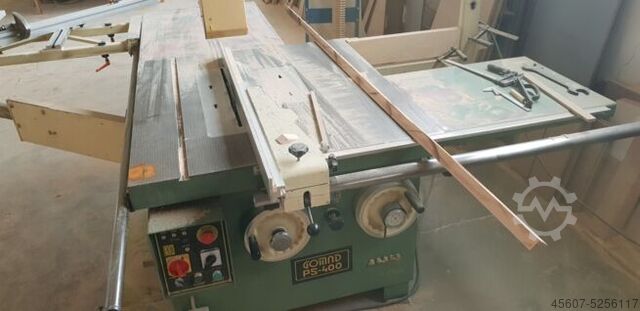
GOMADPS 400
Call
Condition: excellent (used), Year of construction: 1999, Sliding table saws Longitudinal and transverse saw for ps 400 Longitudinal and transverse saw for ps 400 Second hand 1999
Make:
Longitudinal and transverse saw for ps 400
Model:
Longitudinal and transverse saw for ps 400
Description:
Longitudinal and transverse saw for ps 400
Producer of GOMAD
Model / type of the machine ps 400
Year of production 1999
Machine category Longitudinal and transverse saw
Main shield adjustable up / down and at an angle
shield for the shield
Bjdogap Szjpfx Aprjwp
with sidecar
cutting length on the trolley 1500 mm
cutting width at the guide 1000 mm
main engine 6 kW
dimensions of the top 1020 x 1120 mm
with extension
with extension
with a podcinakiem
max diameter of the scoring blade 120 mm
scoring spindle diameter 22 mm
0.75 kW scoring engine
3 types of rotation speeds 2800/4000/5000 rpm
brake
diameter of the extraction port 120 mm
dimensions (length / width / height) 250 x 120 x 120 cm
weight 935 kg
Listing
KΕodawa
1,247 km
Modular drilling machine 8 units automat
GOMADWU 3 G +3 T+2 C
Call
Year of construction: 2021, condition: new, modular drilling machine 8 automatic units
Do:
Go mad
Model:
Wu 3g 2C 3T
Description:
Producer GOMAD
Benh7jc8jp
Year of production 2021
Bwodpfjhara Djx Aprjp
Machine category Modular drilling machine
location
GorzΓ³w Wlkp.
Conditions of delivery
OWN COLLECTION
Shipping costs
Client protection
Start type
to be agreed
Description
Remarks
MODULAR MODULAR DRILL, TRAILER SLIDING BLADE, HALF-ADAPTATION WITH AIR PEDAL DRILL EQUIPMENT
Year:
2021 THE NEW VERSATILE DRILLING MACHINE
Listing
KΕodawa
1,247 km
Universal drill GOMAD WU5 LIGNU
GOMADWU 5
Call
Condition: reconditioned (used), Year of construction: 2020, operating hours: 15,000 h, Task drilling machine wu 5 units top ,two front two rear .
Automatic .Choice of units .No collision .Can be equipped with drilling heads
Bwjdpfjuc Tqdsx Aprop
Listing
KΕodawa
1,247 km
Automatic face drilling machine for drilling
GOMAD LIGNUMWU2 S
Call
Year of construction: 2025, operating hours: 12 h, condition: new, Front drilling machine β automatic for drilling legs at various angles, with a pendulum table. Triple drilling with chip extraction. The machine can operate in different settings and configurations. Designed for through-hole drilling.
Bwjdpfxoxb Elxe Aprsp
Listing
Zielona GΓ³ra
1,303 km
Circular saw
GOMADPS400
Call
Condition: good (used), Year of construction: 1996, functionality: fully functional, cutting height (max.): 75 mm, cutting width (max.): 1,200 mm, saw blade diameter: 400 mm, Slitting and cross-cutting saw well maintained in good condition
Year of production 1996 GOMAD Poland from the new we are the only owner on the equipment of the unit with the undercutting slab and an additional guide for cutting at an angle, up-and-down blade and tilting at an angle up to 45 degrees
DTR documentation. Technical data
Undercutter on a separate motor 0.75 kw
Tilting at an angle 0 45 '
Side carriage
Upper shield on the arm
Polish manufacturer Gomad
Massive stable strong construction
Extension and extension tables
Cutting width on the right side 120 cm
Main saw motor 6 kW, 2880 rpm
RPM of undercutting saw 8500 rpm
Swing of the saw 0-45Β°
max. bore diameter of main saw f 30 mm
max. blade diameter 400mm
Bwedpfx Apeu Axf Njrjp
Undercut saw bore diameter f 22 mm
Listing
SuΕkowice
1,675 km
Multispindle drilling machine
GomadWU
Call
Condition: good (used), heads set: right/left/top/top
spindles span 32mm
motors 1,1kW
heads with 5 spindles
max heads span 2,5m
pneumatic clamps
Bjdpfx Apsyxc Dvjrjwp
regulation of drilling speed
Listing
Γgueda
1,688 km
Single Head Wire Drawing Machine
MILLTV-100
Call
Condition: good (used), Single Head Capstan Block Wire Drawing Machine
Maximum Inlet Wire's Diameter: 30 mm
Bedpfx Apot Ixkzerowp
Listing
Mizil
2,396 km
Vertical machining center
HAITIAN - HISION - MAX MILLMAXMILL NVM1166 - HISION VMU1100 -V180
Call
Condition: repair required (used), Year of construction: 2019, functionality: fully functional, In operational condition: MAXMILL NVM1166 - HISION VMU1100 - HISION V180
Bodpfey Iyw Ssx Aprswp
Listing
StrenΔi
1,792 km
Generator
outfeed table
Call
Condition: used, Outfeed table before resaw IDL000793
Bsdpfsul Rgvox Aprowp
Listing
StrenΔi
1,792 km
Log yard machinery
Log table with scannerRema Control
Call
Condition: used, Log table with elevator and log scanner Rema Control
Bodju Smq Sopfx Aprowp
- logs up to 6 m
- between rails 1100/1050/ 1050/1250 mm
- log table length: 10 m
- Rema Scanner
- log infeed conveyor
Listing
StrenΔi
1,792 km
Scissor lifting table
Lifting table
Call
Condition: excellent (used), Year of construction: 2020, - total length: 8,1 m
- total width: 1200 mm
- height: 950 mm
Bsdpfotddw Aex Aprewp
Hydraulic lift, lifting capacity around 1 ton.
Listing
Sultandere 75. YΔ±l
3,047 km
Construction machine
Onurmaksan - Gemini tableG450
Call
Condition: new, functionality: fully functional, power: 1.1 kW (1.50 HP), Year of construction: 2026, G450 Gemini table for gold beneficiation and seperation
Bwjdoytnn Ijpfx Aprsp
Listing
Zheng Zhou Shi
8,333 km
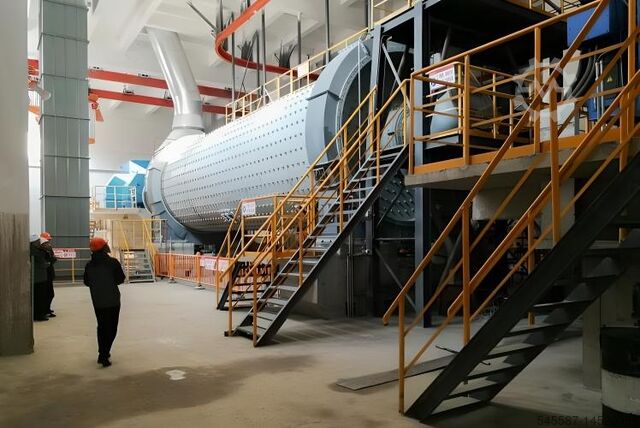
Ball mill for powder and mining plant
Mingyuan Ball Mill For Fine PowderPowder grinding mill for coal, silica
Call
Condition: new, functionality: fully functional, power: 55 kW (74.78 HP), Year of construction: 2026, Ball Mill for Powder and Mining Plant: Structure, Function, and Technical Details
A ball mill is a key grinding machine widely used in mining, metallurgy, cement, chemical, and powder-making industries. It is designed to grind various ores and other materials into fine powder through impact and attrition between steel balls and the material inside a rotating cylindrical shell. In mining plants, ball mills are essential for ore beneficiation, preparing materials for flotation, magnetic separation, or leaching processes. In powder production, they ensure uniform particle size and high surface area for further processing.
Working Principle
The ball mill operates on a simple yet effective principle: as the cylindrical shell rotates around its horizontal axis, the grinding media (steel or ceramic balls) are lifted along the inner wall by centrifugal force and friction. When they reach a certain height, they fall freely, striking and grinding the material below. This repeated motion causes both impact and abrasion, reducing the material to the desired fineness. The grinding process can be performed in dry or wet conditions depending on the application.
Structural Composition
A standard ball mill consists of several main components:
Feeding part: Equipped with a feeder or screw conveyor to ensure uniform material input.
Discharging part: Can be grate type or overflow type, depending on the discharge method.
Rotating part: The cylindrical shell made of steel plates, lined with wear-resistant liners.
Transmission system: Includes motor, reducer, small transmission gear, and electrical control.
Grinding media: Steel balls or ceramic balls of different diameters for efficient grinding.
The internal liner design and ball size distribution are optimized to achieve maximum grinding efficiency and minimal energy consumption.
Technical Details
Typical Specifications:
Feeding size: β€25 mm
Discharge size: 0.074β0.4 mm
Capacity: 0.65β615 t/h (depending on model and material hardness)
Cylinder speed: 18β38 r/min
Power: 18.5β4500 kW
Liner material: High manganese steel, rubber, or alloy steel
Grinding media load: 30β45% of cylinder volume
Operating Modes:
Dry grinding: Suitable for materials that must remain moisture-free, such as cement clinker, limestone, and quartz.
Wet grinding: Common in ore beneficiation, where water or slurry improves grinding efficiency and particle uniformity.
Application in Mining Plants
In mining operations, ball mills are used after crushing to further reduce ore size and liberate valuable minerals. They are integrated into grinding circuits with classifiers, hydrocyclones, and flotation systems. The ground material is classified by size, and oversized particles are returned to the mill for regrinding. This closed-circuit system ensures consistent product fineness and efficient energy use.
Common Applications:
Gold, copper, iron, and zinc ore grinding
Cement clinker and slag processing
Bsdpfxoq Nf U Ee Aprjwp
Silicate and ceramic powder production
Coal and mineral powder preparation
Conclusion
A ball mill is an indispensable piece of equipment in both powder production and mining beneficiation plants. Its ability to grind materials into fine, uniform particles makes it vital for downstream processes such as flotation, sintering, and chemical reactions.
Listing
Zheng Zhou Shi
8,333 km
Crushing equipment
Mingyuan Dry and Wet Ball MillCustomerizable Model for ball mill plant
Call
Condition: new, functionality: fully functional, Year of construction: 2026, Dry and Wet Ball Mill: Structure, Operation, and Technical Details
A ball mill is a fundamental grinding device used in mineral processing, cement manufacturing, chemical production, and other industrial applications. It works by rotating a cylindrical shell filled with grinding mediaβusually steel ballsβcausing impact and friction that reduce materials to fine powder. Based on the grinding environment, ball mills are classified into dry and wet types, each suited for specific materials and process requirements.
Working Principle
Both dry and wet ball mills operate on the same mechanical principle. The rotating cylinder, driven by a motor through a gear system, lifts the grinding media and material along the inner wall. As the rotation continues, the balls fall under gravity, striking and grinding the material. The difference lies in the presence or absence of a liquid medium during grinding.
Dry Ball Mill
A dry ball mill is used when the material must remain moisture-free or when water could affect product quality. It is commonly applied in cement clinker, limestone, quartz, and refractory material grinding. The discharge can be either grate type or overflow type, depending on the desired fineness.
Bodpfoq Nx Alox Aprewp
Technical Features:
Feeding size: β€25 mm
Discharge size: 0.075β0.4 mm
Capacity: 0.65β90 t/h
Liner material: High manganese steel or wear-resistant alloy
Drive system: Gear-driven or direct-coupled motor
Dust control: Equipped with air exhaust and dust collector
Advantages:
Suitable for materials sensitive to moisture
No drying process required after grinding
Lower corrosion risk and simpler maintenance
Easier material classification and separation
Limitations:
Dry grinding produces more dust and heat, requiring efficient ventilation and dust collection systems.
Wet Ball Mill
A wet ball mill operates with water or another liquid medium added to the material. The slurry formed during grinding improves efficiency by reducing friction and preventing excessive heat buildup. It is widely used in ore beneficiation, ceramics, and chemical industries.
Technical Features:
Feeding size: β€25 mm
Discharge size: 0.074β0.2 mm
Capacity: 0.65β615 t/h
Liner material: Rubber or high-chromium steel
Discharge method: Overflow or grate type
Auxiliary equipment: Classifier, pump, and thickener for slurry circulation
Advantages:
Higher grinding efficiency and finer particle size
Reduced dust and noise levels
Continuous operation suitable for beneficiation circuits
Better control of particle uniformity
Limitations:
Requires drying if the final product must be in powder form and involves more complex slurry handling.
The selection between dry and wet grinding depends on the material characteristics, downstream process, and environmental conditions. Dry mills are preferred for materials that must stay moisture-free, while wet mills are ideal for fine grinding and slurry-based processes.
Conclusion
Dry and wet ball mills share the same mechanical structure but differ in their grinding environment and application scope. The dry type offers simplicity and low maintenance for moisture-sensitive materials, while the wet type provides higher efficiency and finer output for mineral and chemical processing. Understanding their technical parameters and operational differences ensures optimal equipment selection, improved productivity, and reliable performance in industrial grinding operations.
Listing
Zheng Zhou Shi
8,333 km
Crushing equipment
Hammer crusher /Hammer milllimestone, coal gangue,concrete crusher
Call
Condition: new, power: 55 kW (74.78 HP), Year of construction: 2026, A hammer crusher is a machine that uses high-speed rotating hammers to crush and break materials into smaller pieces. It is commonly used in various industries, including mining, cement, construction, metallurgy, and chemical processing. The basic principle of a hammer crusher involves a central rotor with hammers or blades that rotate and impact the material being crushed against a hard surface.
Here are the key features and components of a typical hammer crusher:
1. Rotor:
- The rotor is a central component of the hammer crusher. It usually consists of a shaft with multiple discs or hammers attached.
- The rotor's rotation causes the hammers to swing outward, impacting the material.
2. Hammers:
- Hammers are the striking or crushing elements attached to the rotor. They can be fixed or pivotally attached.
- The material is crushed as the hammers impact it, generating kinetic energy.
3. Casing or Housing:
- The casing or housing encloses the rotor and hammers, providing structural support and safety.
- It also serves to contain the crushed material and direct it to the desired discharge point.
4. Grate Bars or Screens:
- Positioned at the bottom of the crusher casing, grate bars or screens control the size of the crushed material by allowing smaller particles to pass through while keeping larger ones inside for further crushing.
5. Impact Plate:
Bedpsq I Nxdefx Aprewp
- Located near the bottom of the crusher, the impact plate absorbs the impact energy generated by the hammers and prevents excessive wear on the casing.
6. Drive System:
- The hammer crusher is powered by a motor connected to the rotor through a drive belt or coupling.
- The motor provides the necessary power to rotate the rotor, enabling the hammers to crush the material.
7. Adjustable Discharge:
- Some hammer crushers feature an adjustable discharge, allowing users to control the size of the crushed material by adjusting the gap between the impact plate and the hammers.
8. Applications:
- Hammer crushers are used for crushing a variety of materials, including coal, limestone, gypsum, aggregates, and various minerals.
- They are commonly employed in the mining industry for primary and secondary crushing of ore.
- In the cement industry, hammer crushers are used to crush limestone and other materials before they are mixed into the raw meal.
9. Maintenance and Safety:
- Regular maintenance is essential to ensure the efficient operation of a hammer crusher. This includes checking and replacing worn hammers, inspecting the rotor, and lubricating moving parts.
- Safety features, such as access doors and safety guards, are typically incorporated to prevent accidents during operation and maintenance.
Technical Specifications (Typical MINGYUAN Series)
Model Category,Max Feed Size,Capacity (t/h),Motor Power (kW),Rotor Speed (rpm)
Small (PC-400), β€100mm, 5 β 10, 11, "1,000"
Medium (PC-800),β€200mm, 20 β 50, 55, 750 β 900
Heavy (PC-1200),β€350mm, 80 β 110, 132 β 160, 600 β 750
Heavy Hammer,"β€1,200mm", "500 β 1,000+ ","400 β 1,000" ,Variable
Listing
Zheng Zhou Shi
8,333 km
Mill / grinding mill
Batch Ball Mill, Silica grinding millQuartz ball mill, silica powder grinding
Call
Year of construction: 2026, condition: new, ceramic ball mill ,Batch ball mill ,also called ceramic ball mill ,it is used for fine grinding of feldspar,quartz,clay,ore and so on.The ceramic ball mill is mainly used for material mixing, grinding,uniform product fineness,and saving power.It can be dry or wet.The machine can use different liner types according to production needs to meet different needs.The fineness of the grinding operation is controlled by the grinding time
ceramic ball mill Working principle
Bedpjvzx Auofx Aprowp
when ball mill working,steel balls inside drum will rotate with the drum to some height,and then steel balls fall down with materials to reach the point of grinding.
Working Principle of Ceramic ball mill
ceramic ball mill ,Intermittent ball mill grinding operation is finished in the cylinder body. When the cylinder rotates, materials ascend to a certain height and then fall along a certain path due to the balls' gravity. Two forces are generated on the balls inside. One is the force on balls through tangent direction; the other is a opposite force in the contrast to the diameter of balls, as a result of the force generated when the balls slide down. These two forces will constitute a couple for the steel balls. The balls are squeezed between the cylinder and the adjacent steel balls, so the couple can make unequal-sized friction force. The balls will orbit along with the cylinder axis and then fall down, which can produce a strong impact force on the ores in the cylinder body and, as a result, the ores will be crushed. In conclusion, the ores in the cylinder body are mainly crushed by composite effect of peeling force, impact force and extrusion force.
Ceramic ball mill also named Intermittent ball mill which adopts the wet intermittent operation, is used for fine grinding and mixing the material such as feldspar, quartz, clay ceramic raw materials. The discharging and the mud size can through through 1000 sieve pore. This machine is high milling machinery, materials should be Broken in the fineness of the state into the grinding mill to get the highest efficiency and economic benefits.
The cement mill is key equipment for the grinding process of the cement clinker after the crushing process of it. It is mainly used in the cement silicate product industry. After long term design and manufacture of the cement mill, our company now has series of cement mill with various specifications to meet with different requirement from our customers.
Features of Cement Mill
Our company adopts suitable transmission methods according to different specifications. We have brim drive and center drive as transmission form. The cylinder adopts new type step lining to increase the grinding area. And it is easily repairable and changeable. The new designed separate-chambered structure adopts flexible lifting blade and fixed lifting blade and it is easily fixed and repaired.
Technical Details
We have different models and options for different requirements, please contact us for more info.
Listing
Zheng Zhou Shi
8,333 km
Glass grinding machine
Henan Mingyuan Ceramic /Silica Ball MillBatch ball mill for glass ceramic making
Call
Condition: new, Year of construction: 2026, power: 7.5 kW (10.20 HP), Batch ball mills find applications in various industries where the processing of materials in discrete batches is required. The versatility of batch ball mills makes them suitable for a range of applications. Here are some common batch ball mill applications:
1. Ceramics Industry:
- *Glaze Preparation:* Batch ball mills are extensively used in the ceramics industry for preparing glazes. Raw materials such as feldspar, quartz, and clay are ground with ceramic balls to achieve the desired particle size for glaze formulation.
2. Chemical Industry:
- *Material Grinding:* Batch ball mills are used for grinding and blending various chemical materials. This includes the production of pigments, dyes, and other specialty chemicals where precise particle size control is crucial.
3. Pharmaceuticals:
- *Drug Formulation:* In pharmaceutical manufacturing, batch ball mills are used for grinding and blending powders to create drug formulations. The controlled environment provided by these mills is essential for maintaining the integrity of pharmaceutical compounds.
4. Food Industry:
- *Ingredient Mixing:* Batch ball mills may find application in the food industry for mixing and grinding ingredients. This can include the production of food additives, flavorings, and other powdered or granular products.
5. Mining and Minerals Processing:
- *Ore Grinding:* Batch ball mills are used in mining and minerals processing for grinding minerals and ores. The controlled grinding helps in obtaining the desired particle size for subsequent processes, such as mineral separation or extraction.
Bodpfx Apeq I N H Njrowp
6. Paints and Coatings:
- *Pigment Dispersion:* In the paints and coatings industry, batch ball mills are employed for dispersing pigments into paint formulations. Achieving a uniform particle size is crucial for the quality and appearance of the final coating.
7. Building Materials:
- *Raw Material Grinding:* Batch ball mills are used in the preparation of raw materials for the production of building materials, such as cement and concrete. Grinding of materials like limestone and clay helps in obtaining the desired fineness for subsequent processes.
8. Electronic Materials:
- *Ceramic Powder Processing:* In the electronics industry, batch ball mills can be employed for processing ceramic powders used in the production of electronic components and insulating materials.
9. Research and Development:
- *Material Testing:* Batch ball mills are often used in research and development laboratories for testing and optimizing material formulations. They provide a controlled environment for small-scale processing and experimentation.
10. Customized Applications:
- *Specialized Processes:* Batch ball mills can be adapted for various specialized processes in different industries where precise grinding and mixing are required. Custom modifications can be made based on specific application requirements.
When using a batch ball mill, it's important to consider factors such as the type of material being processed, desired particle size, and the specific requirements of the end product. Additionally, following the manufacturer's guidelines and maintaining proper operating conditions are essential for efficient and effective milling processes.
Technical details
We have different options for different requirements, please contact our team for more info.
Trust Seal
Dealers certified through Machineseeker

Listing
Zheng Zhou Shi
8,333 km
Cement mill,clinker grinding plant
Clinker grinding mill / cement ball millcement grinding with air classifier
Call
Year of construction: 2026, condition: new, functionality: fully functional, A cement clinker grinding mill is a specialized equipment used to grind the hard nodular clinker into fine powder, which is cement. Most cement is currently ground in ball mills and also vertical roller mills, which are more effective than ball mills.
Here are key features and information about cement clinker grinding mills:
1. Raw Materials:
- The main raw material for making cement is clinker, which is produced by sintering limestone and clay. Other materials such as gypsum, fly ash, or slag may also be added during the grinding process to achieve specific properties.
2. Grinding Process:
- The clinker and other additives are finely ground in the grinding mill to produce cement. The grinding process is a crucial step in cement production and contributes significantly to the final quality of the product.
Bodpfoq Nfbhex Aprewp
3. Types of Mills:
- Ball Mills: Traditional ball mills are commonly used for grinding clinker. They operate by rotating a cylinder with steel grinding balls, causing the balls to fall back into the cylinder and onto the material to be ground.
- Vertical Roller Mills (VRM): VRM technology has become increasingly popular for clinker grinding. These mills use a rotating table with rollers to crush and grind the clinker, providing energy efficiency and a smaller footprint compared to ball mills.
4. Gypsum Addition:
- Gypsum is often added during the grinding process to control the setting time of the cement. It prevents flash setting of the clinker and facilitates the formation of a workable and pumpable cement paste.
5. Quality Control:
- Quality control measures, such as monitoring the fineness of the cement, chemical composition, and other properties, are implemented during the grinding process to ensure the final product meets the required specifications and standards.
6. Clinker Cooling:
- Before grinding, the clinker is produced by heating the raw materials in a kiln. The clinker is then cooled before entering the grinding mill to prevent excessive heat build-up during grinding.
7. Dust Collection and Environmental Considerations:
- Dust collectors and air pollution control systems are often employed to capture and control the dust generated during the grinding process, addressing environmental and safety concerns.
8. Packaging and Storage:
- After grinding, the cement is typically stored in silos before being packaged in bags or dispatched in bulk for distribution to construction sites or for sale in the market.
Cement clinker grinding mills play a crucial role in the cement production process, and advancements in technology continue to improve the efficiency and environmental sustainability of the grinding process.
Technical details
We have different options for different requirements, please contact our team for more info.
Listing
Zheng Zhou Shi
8,333 km
Powder grinding mill
ball mill for mining &fine powder makingsilica/Barite/limestone powder plant
Call
Condition: new, Year of construction: 2026, power: 300 kW (407.89 HP), Ball Mill for Mining & Fine Powder Making:
A ball mill is a fundamental grinding device widely used in mining, metallurgy, cement, and chemical industries. It is designed to grind ores and other materials into fine powder through impact and attrition between steel balls and the material inside a rotating cylindrical shell. In mining plants, ball mills are essential for ore beneficiation, while in powder-making industries, they ensure uniform particle size and high surface area for further processing.
Working Principle
The ball mill operates on the principle of impact and friction. As the cylindrical shell rotates around its horizontal axis, the grinding mediaβusually steel or ceramic ballsβare lifted along the inner wall by centrifugal force and friction. When they reach a certain height, they fall freely, striking and grinding the material below. This repeated motion breaks down the material into fine particles. The process can be carried out in dry or wet conditions depending on the application.
Structural Composition
A standard ball mill consists of several main components:
Feeding part: Ensures uniform material input through a feeder or screw conveyor.
Discharging part: Can be grate type or overflow type, depending on the discharge method.
Rotating part: The cylindrical shell made of steel plates, lined with wear-resistant liners.
Transmission system: Includes motor, reducer, small transmission gear, and electrical control.
Grinding media: Steel or ceramic balls of various diameters for efficient grinding.
The internal liner design and ball size distribution are optimized to achieve maximum grinding efficiency and minimal energy consumption.
Technical Details/Typical Specifications:
Feeding size: β€25 mm
Discharge size: 0.074β0.4 mm
Capacity: 0.65β615 t/h (depending on model and material hardness)
Cylinder speed: 18β38 r/min
Bodpfxjq Ngafj Aprswp
Power: 18.5β4500 kW
Liner material: High manganese steel, rubber, or alloy steel
Grinding media load: 30β45% of cylinder volume
Operating Modes:
Dry grinding: Used for materials that must remain moisture-free, such as cement clinker, limestone, and quartz.
Wet grinding: Common in ore beneficiation, where water or slurry improves grinding efficiency and particle uniformity.
Application in Mining and Powder Production
In mining operations, ball mills are used after crushing to further reduce ore size and liberate valuable minerals. They are integrated into grinding circuits with classifiers, hydrocyclones, and flotation systems. The ground material is classified by size, and oversized particles are returned to the mill for regrinding. This closed-circuit system ensures consistent product fineness and efficient energy use.
In fine powder production, ball mills are used to produce materials such as silicate, ceramic powder, refractory materials, and chemical raw materials. The uniform particle size achieved by ball milling enhances product quality and performance in downstream applications.
Conclusion
A ball mill is an indispensable piece of equipment for both mining and fine powder making. Its ability to grind materials into fine, uniform particles makes it vital for ore beneficiation and industrial powder production. With flexible configurations, high efficiency, and reliable operation, modern ball mills provide a cost-effective and energy-efficient solution for large-scale grinding, ensuring consistent quality and productivity across diverse applications.
Listing
Zheng Zhou Shi
8,333 km
Roll forming line
Rod ball mill / Rod Grinding MillFor Sand and mining beneficiation plant
Call
Condition: new, Year of construction: 2026, We have various kinds of ball grinding mill such as batch ball mill, rod mill, cement ball mill, mining ball mill, welcome to contact our team for further details according to your specific requirements.
Bwedpfx Asq I Nw Isprep
Listing
Zheng Zhou Shi
8,333 km
Fine Powder Grinding Plant
Cement mill & Ultrafine Grinding MillFine Powder Grinding Plant
Call
Condition: new, functionality: fully functional, Year of construction: 2026, Cement Mill & Ultrafine Grinding Mill
ποΈ Introduction to Cement Mill & Ultrafine Grinding Mill
In the world of construction and materials processing, achieving the right particle size is essential. Introducing the Cement Mill and Ultrafine Grinding Millβtwo pivotal machines designed to deliver superior grinding performance for cement production and ultrafine materials. Letβs dive into their features and applications! πΌ
π₯ What is a Cement Mill?
A Cement Mill is a crucial piece of equipment in cement production. It grinds clinker, gypsum, and other additives to produce fine cement powder. This machine ensures the optimal particle size for high-quality cement, essential for building robust structures. π
π§ What is an Ultrafine Grinding Mill?
An Ultrafine Grinding Mill is designed to produce extremely fine powders from various raw materials, such as minerals, chemicals, and industrial waste. It operates at high efficiency, delivering ultra-fine materials for advanced applications like coatings, plastics, and ceramics. π
πΌ Key Benefits of Using Cement Mill & Ultrafine Grinding Mill
1. High Efficiency: Both mills are engineered for maximum efficiency, ensuring rapid processing times and reduced energy consumption. πΏπ‘
2. Superior Grinding Performance: Achieve consistent, high-quality output with precise control over particle size. π
3. Versatility: Suitable for a wide range of materials, making them essential for various industrial applications. π³
4. Durability and Reliability: Built with robust materials, these mills offer long-lasting performance in demanding industrial environments. πͺ
π Applications in Industry
Cement Mill Applications:
1. Cement Production: Essential for producing high-quality cement for construction projects.
2. Infrastructure Development: Used in creating concrete for roads, bridges, and buildings.
Ultrafine Grinding Mill Applications:
Bjdpfxoq Nyydo Aprswp
1. Mineral Processing: Producing ultra-fine powders for advanced material applications.
2. Chemical Manufacturing: Used in creating fine chemicals for various industrial processes.
3. Environmental Applications: Grinding industrial waste for recycling and reuse. β»οΈ
π Conclusion
Whether youβre in construction, materials processing, or advanced manufacturing, the Cement Mill and Ultrafine Grinding Mill are indispensable tools. Their efficiency, versatility, and superior performance make them a valuable addition to any production line. Contact us today to learn more about these innovative machines and how they can revolutionize your operations! π
We make it easier for you to find: "gomad table mill"
You will receive new offers immediately and free of charge via e-mail
You can easily terminate the search request at any time
This may be of interest to you